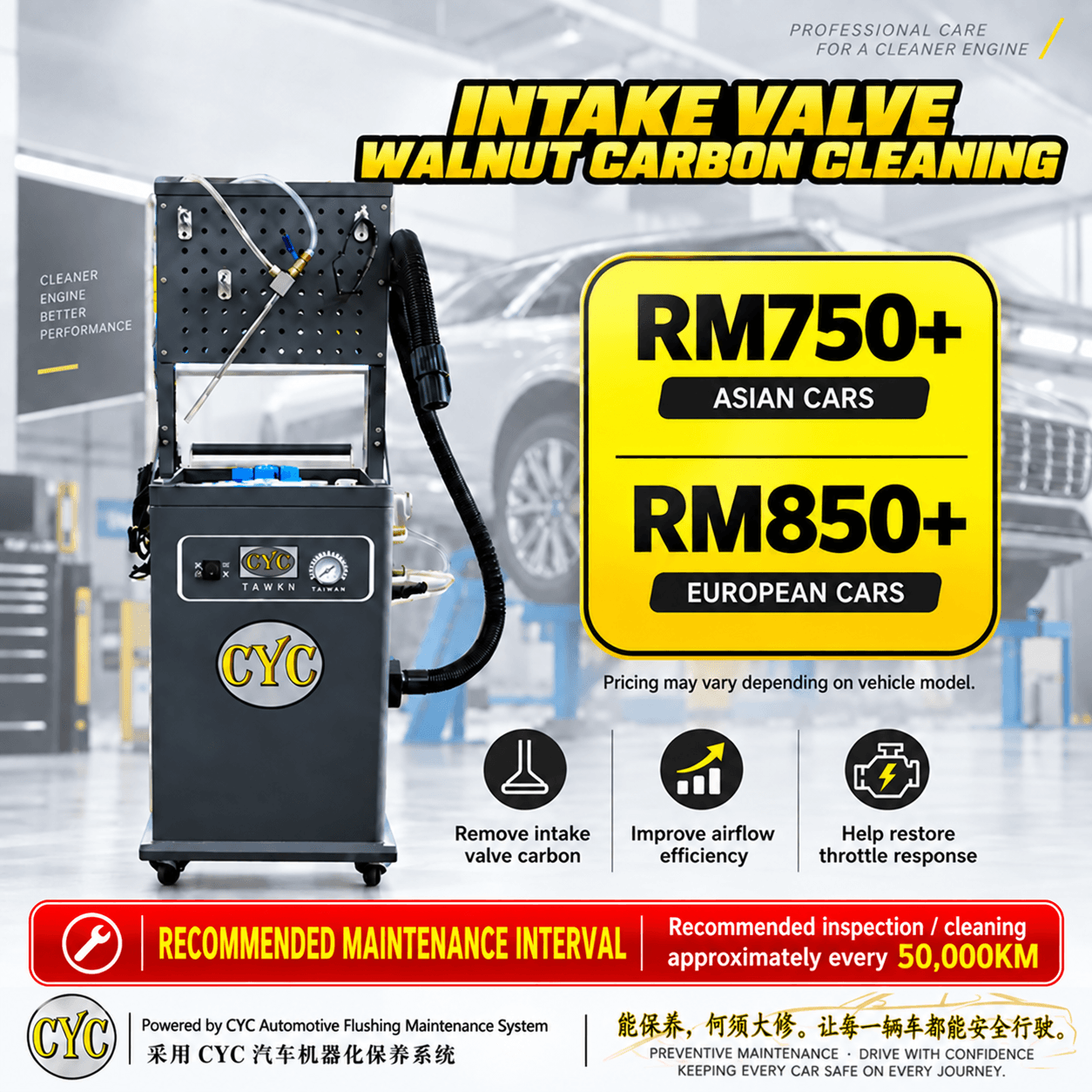
Engine Losing Power or Responding Slowly? Carbon Buildup on Your Intake Valves Could Be One of the Causes!
Over time, carbon deposits, oil residue, and other contaminants may gradually accumulate on an engine’s intake valves and intake ports.
This is particularly common in some Gasoline Direct Injection (GDI) engines, where fuel is injected directly into the combustion chamber instead of passing over the intake valves. Unlike conventional port fuel injection engines, the intake valves do not benefit from the cleaning effect of fuel passing over them.
As carbon deposits continue to build up, they may restrict airflow and affect engine performance, potentially causing:
Sluggish Acceleration: Delayed engine response when pressing the accelerator.
Rough Idling: Engine vibration or unstable idling when stationary.
Reduced Engine Performance: Noticeable loss of power, particularly during acceleration or under load.
Increased Fuel Consumption: Carbon buildup may affect airflow and combustion efficiency, potentially increasing fuel consumption.
Abnormal Engine Operation: Severe deposits may contribute to engine misfires or related diagnostic trouble codes.
Important: These symptoms can also be caused by other mechanical or electronic issues. A proper inspection is recommended to identify the actual cause before proceeding with any cleaning service.
What Is Intake Valve Walnut Carbon Cleaning?
Walnut Blasting is a professional mechanical cleaning method designed to remove carbon deposits from engine intake valves and accessible intake ports.
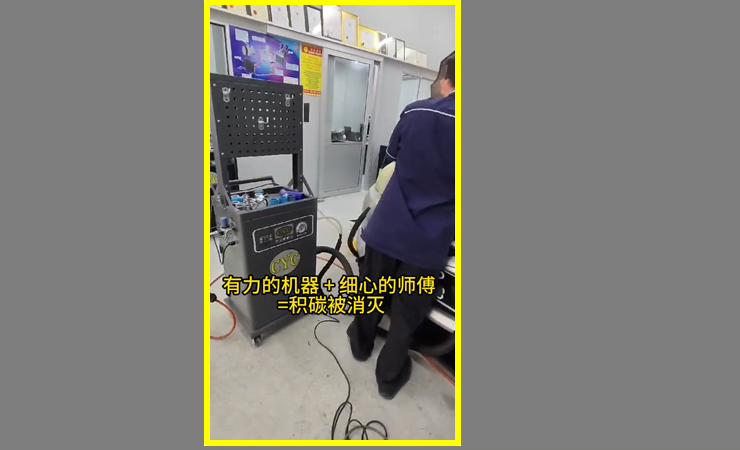
CYC uses a specialised Walnut Blasting Machine that combines processed walnut shell granules, compressed air, and a vacuum extraction system to help remove stubborn carbon deposits from the intake valve surfaces.
Unlike certain chemical cleaning methods, walnut blasting can directly target thick and hardened carbon deposits that have accumulated over time.
Main Cleaning Areas: Intake valve backs and accessible intake ports — not the internal combustion chamber.
Benefits of Intake Valve Walnut Carbon Cleaning
01 | Removes Stubborn Carbon Deposits
Helps remove accumulated carbon deposits and contaminants from intake valves and accessible intake ports, improving the cleanliness of these components.
02 | Improves Intake Airflow
Helps reduce airflow restrictions caused by carbon buildup, allowing the engine to operate with more normal intake airflow.
03 | May Improve Engine Power and Acceleration
If reduced engine performance or sluggish acceleration is caused by intake valve carbon deposits, cleaning may help improve engine responsiveness.
04 | Supports Smoother Engine Operation
When carbon buildup affects airflow and combustion stability, proper cleaning may help improve idling stability and overall engine operation.
05 | Supports Preventive Maintenance
Regular inspections help identify carbon buildup before deposits become excessive, allowing vehicle owners to determine whether cleaning is necessary.
Actual results depend on engine design, carbon buildup severity, and the vehicle’s overall mechanical condition.
Frequently Asked Questions (FAQ)
Q1: Are intake valve carbon deposits and combustion chamber carbon deposits the same?
No. These carbon deposits develop in different parts of the engine.
Intake Valve Carbon Deposits
Carbon deposits mainly accumulate on the backs of intake valves and inside intake ports, potentially restricting airflow into the engine.
CYC uses a specialised Walnut Blasting Machine to clean carbon deposits from these areas.
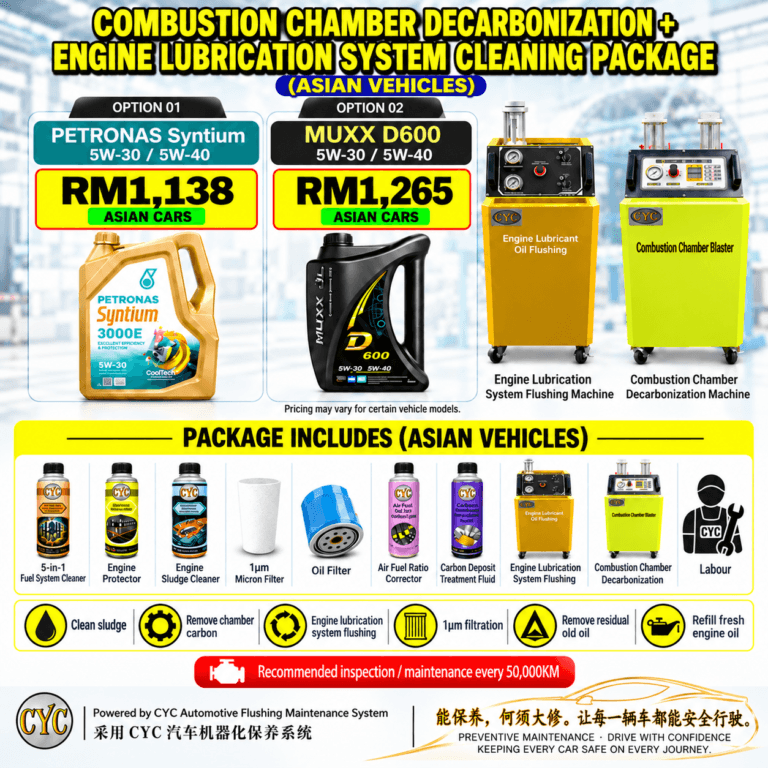
Combustion Chamber Carbon Deposits
Carbon deposits develop inside the combustion chamber, including the piston crown and other combustion chamber surfaces. Excessive deposits may affect combustion conditions and engine operation.
CYC uses a specialised Combustion Chamber Blaster to clean deposits in the combustion chamber.
In simple terms: Cleaning the combustion chamber does not mean the intake valves are clean. Likewise, cleaning the intake valves does not mean combustion chamber deposits have been removed.
Q2: If I have already performed combustion chamber decarbonization, do I still need walnut blasting?
Not necessarily. It depends on the actual condition of the intake valves.
These two services target different areas of the engine and cannot completely replace one another.
If the combustion chamber has carbon deposits but the intake valves remain relatively clean, walnut blasting may not be necessary.
However, if the intake valves have excessive carbon buildup, additional intake valve cleaning may still be required even after combustion chamber decarbonization.
CYC recommends inspecting the engine’s condition before deciding whether additional cleaning is necessary.
Q3: What is the difference between walnut blasting and engine oil sludge cleaning?
These two services target completely different engine systems.
Intake Valve Walnut Blasting
Primarily removes carbon deposits from the intake valves and accessible intake ports to help improve airflow affected by carbon buildup.
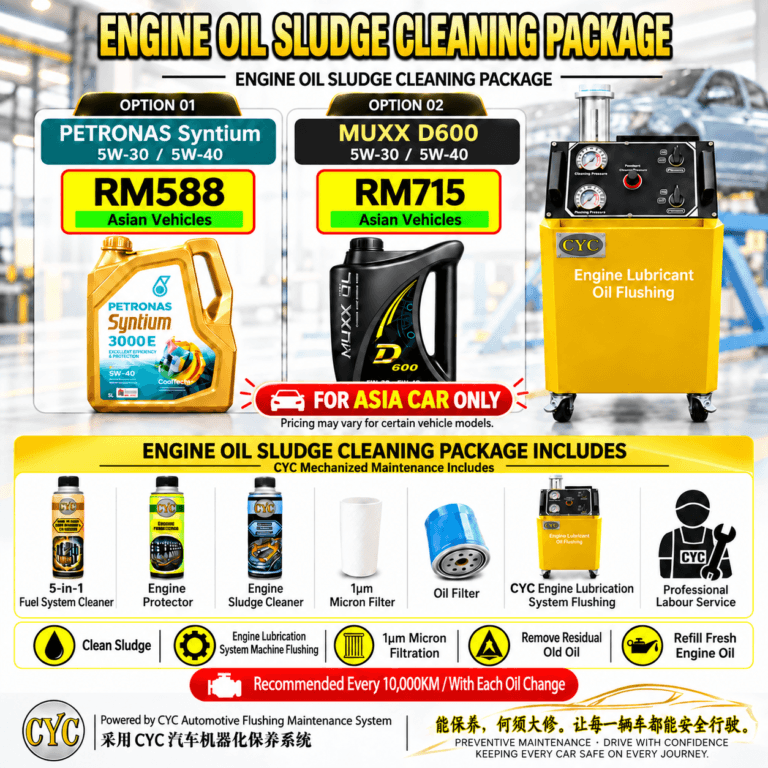
Engine Oil Sludge Cleaning
Targets oil sludge, residual used engine oil, and other deposits within the engine lubrication system.
CYC uses a professional Engine Lubrication System Flushing Machine, connected through the engine oil filter housing or mounting point. The engine’s oil pump drives the circulation process, while precision filtration helps remove contaminants from the circulating engine oil.
Walnut blasting focuses on the engine intake system, while oil sludge cleaning focuses on the engine lubrication system. These services serve different purposes and cannot replace each other.
Q4: Can walnut blasting solve engine oil consumption or oil-burning problems?
Generally, walnut blasting does not directly resolve engine oil consumption problems.
Walnut blasting mainly removes intake valve carbon deposits.
Excessive engine oil consumption may be caused by several factors, including:
Carbon deposits restricting piston ring movement
Worn or deteriorated valve stem seals
Cylinder wall wear
Piston ring wear or damage
Other mechanical issues
If excessive oil consumption is related to carbon deposits around the piston rings, CYC can assess whether the engine is suitable for Non-Dismantling Oil Burning Treatment.
However, if the engine has significant mechanical wear or damage, cleaning cannot replace the necessary mechanical repairs.
Different causes of excessive oil consumption require different solutions. Not every engine is suitable for non-dismantling treatment.
Q5: Is walnut blasting necessary every 50,000 KM?
Not necessarily. CYC recommends inspecting intake valve carbon buildup approximately every 50,000 KM, rather than automatically performing cleaning at every interval.
Carbon accumulation varies depending on engine design, driving conditions, driving habits, and maintenance history.
If inspection shows only minor deposits and the engine is operating normally, immediate cleaning may not be necessary.
If excessive carbon buildup is found and is affecting engine operation, professional cleaning may be recommended.
Inspect first, then determine whether cleaning is necessary. This is a more practical approach to preventive maintenance.
Q6: Which engines are more likely to develop intake valve carbon deposits?
Some engines equipped with Gasoline Direct Injection (GDI) technology are more susceptible to carbon buildup on the backs of intake valves.
This is because fuel is injected directly into the combustion chamber and generally does not pass over the intake valves, unlike conventional port fuel injection systems.
However, not every GDI engine will develop severe carbon deposits, and not every engine requires walnut blasting.
The need for cleaning should be determined based on the engine design, vehicle condition, and inspection findings.
Understanding the Differences Between Four Engine Cleaning & Maintenance Services
Different areas of an engine can develop different types of carbon deposits, oil sludge, and contaminants. Each requires an appropriate cleaning or maintenance method.
CYC Professional Service | Main Cleaning / Treatment Area |
|---|---|
| Intake Valve Walnut Cleaning | Carbon deposits on intake valves and accessible intake ports |
| Combustion Chamber Decarbonization | Carbon deposits inside the combustion chamber |
| Engine Oil Sludge Cleaning | Oil sludge and deposits within the engine lubrication system |
| Non-Dismantling Oil Burning Treatment | Piston ring deposits and certain deposit-related excessive oil consumption conditions |
Not all carbon deposits develop in the same location, and not all cleaning machines are designed to treat the same problem.
At CYC, we assess the vehicle’s condition and recommend the appropriate cleaning or maintenance service based on inspection findings, helping customers avoid unnecessary cleaning or parts replacement.
Service Price | Package Price
🚗 Asian Vehicles
From RM750
🚘 European Vehicles
From RM850
Important Pricing Information:
Due to differences in engine design, intake manifold configuration, and accessibility, certain vehicles may require additional dismantling and reinstallation labour charges.
The final quotation will be confirmed based on the vehicle model and the complexity of the service.
To help us confirm service suitability and pricing, kindly provide:
Vehicle Brand & Model
Year of Manufacture
Engine Capacity (CC)
Current Mileage (KM)
Our team will review your vehicle details and provide the relevant service quotation.
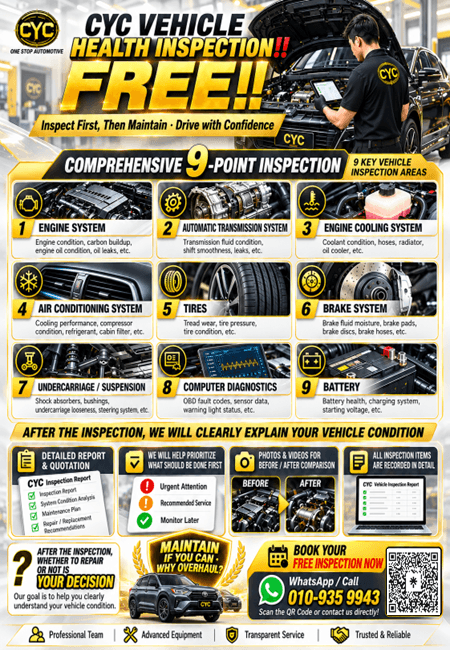
Free Comprehensive Vehicle Inspection
Inspect First, Recommend Accordingly. Understand Your Vehicle’s Condition Before Deciding on Maintenance or Repairs.
CYC provides a free comprehensive vehicle inspection covering nine major areas:
Engine System Inspection
Automatic Transmission & ATF Condition Inspection
Engine Cooling System Inspection
Automotive Air Conditioning System Inspection
Tyre Inspection
Brake System Inspection
Suspension & Undercarriage Inspection
Computerised Vehicle Diagnostics
Battery & Charging System Inspection
After the inspection, our team will explain the findings and provide maintenance recommendations with transparent pricing.
Customers can then decide whether to proceed with any recommended services.
Estimated Inspection Time: Approximately 1 hour, depending on vehicle condition.
Flexible Payment Options
CYC offers several convenient payment methods to help customers manage their vehicle maintenance expenses.
0% Credit Card Instalment Plans: Eligible transactions of RM500 and above may qualify for 6- or 12-month instalment plans.
Standard Credit Card Payment
Shopee / Grab PayLater (subject to applicable terms)
ShopeePay / GrabPay / Touch ‘n Go eWallet
Cash and Bank Transfer
Instalment facilities are subject to the applicable payment provider’s terms and CYC’s eligibility conditions.

Book Your Intake Valve Walnut Carbon Cleaning Service
Reduced engine power, sluggish acceleration, or rough idling does not always mean parts need to be replaced. However, cleaning alone may not resolve every engine problem. The key is identifying the actual cause first.
If your vehicle has exceeded 50,000 KM or you suspect excessive intake valve carbon buildup, contact CYC to arrange an inspection.
📲 WhatsApp: 010-935 9943
CYC ONE STOP AUTOMOTIVE SDN BHD
能够保养,何须大修。
Caring For Your Car.